
Vault of the Void
Spider Nest GamesCard
4.442.00 Reviews
- Version
- 2.8.9
- Installs
- 10.00K
- Age Rating
- Everyone
Screenshots
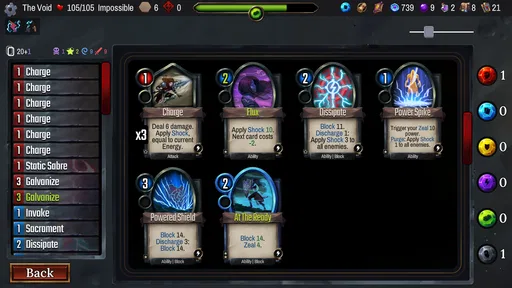

Our Review of Vault of the Void
 Analysis by Appyee
I’d approach Vault of the Void as a thoughtful card game rather than a quick way to fill a spare minute. Its appeal is in making choices, watching a plan take shape, and adjusting when a run does not go as expected. That can feel especially welcoming if you like strategy but are wary of deck-builders that throw too many systems at you at once.
What to expect from a run
The basic pleasure is less about collecting a huge pile of cards and more about making your choices work together. A card can look useful on its own, but the satisfying moment comes when it supports a broader approach. I found it helpful to treat each run as a chance to test one idea, rather than trying to create a perfect deck immediately.
That distinction matters if you are used to card games where the main reward is opening packs or chasing a particular collection. Here, the draw is the decision-making within a run: consider what your current deck is already doing well, then pick additions that strengthen that direction or cover a weakness. When a choice does not pay off, it gives you something concrete to reconsider next time.
A comfortable first session
When I start a strategy game for the first time, I want enough guidance to make a meaningful move without having every decision made for me. The tutorial in this game helps with that first hurdle. I would take the opening session slowly, read the card effects, and focus on understanding what the game is asking rather than trying to win through speed.
A practical first goal is simply to finish a few encounters with a clearer sense of how your cards support one another. Resist the urge to judge a card in isolation: ask what it contributes to the plan you are forming. If a run ends early, that is still useful feedback. You can notice whether you lacked a coherent direction, overlooked an interaction, or chose a card that did not fit the situation.
Where the strategy starts to click
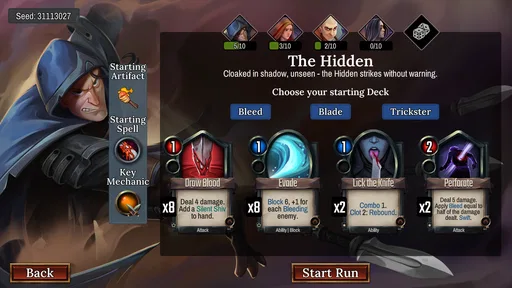
Once the fundamentals feel familiar, I’d experiment with the different classes instead of settling on one after a single attempt. Their distinct cards and abilities give you a reason to revisit the game with a new approach, but changing class also means learning new patterns. If a class feels awkward at first, I would give it another try after you understand the general flow; initial confusion does not necessarily mean it is a poor fit.
One useful habit is to pause before each choice and name the job you want the next card to do. Does your deck need more consistency, a way to reinforce its strongest idea, or support for a weak point? That small question can prevent a common beginner mistake: taking an option because it looks powerful without considering whether it belongs in the deck you are actually building.
How it fits everyday play
This is a better match for a quiet break when you can give the screen your attention than for a moment when you need to be interrupted every few seconds. For example, I’d choose it on a commute with a reliable seat or during a relaxed evening, rather than while walking between errands. Strategic choices are the point, so constantly losing your train of thought can make the experience feel more demanding than it needs to.
Compared with a lighter card game built around quick matches, this one asks more of you: learn the cards, consider how a deck is developing, and accept that a run may end without a win. In return, it offers more room to experiment than a simple game of matching or luck. If what you want is a short, low-attention diversion, a casual card game is probably a better pick; if you enjoy working through a plan, this is the more rewarding option.
Who should give it a pass
I would skip it if you dislike losing progress in a roguelike structure, want every session to end in a clear victory, or prefer games where the rules can be ignored while you play. The same goes for anyone who wants a social card table or a quick head-to-head match: the appeal here is personal strategy, not conversation or competition with another player.
It also asks for patience with experimentation. A disappointing run can be frustrating if you see it as wasted time, but it feels more worthwhile when you can identify a choice to change next time. If that kind of reflection sounds tedious, a simpler card game may suit you better. If it sounds satisfying, the setbacks are part of what makes improvement feel earned.
First Impressions
Okay, let's talk about the first thing that caught my eye - the visuals. Vault of the Void isn't about flashy graphics or over-the-top animations. It's all about that clean, crisp look that makes everything easy on the eyes. The interface is user-friendly, and as a newbie, I appreciated how intuitive everything felt right from the get-go.
Now, onto the gameplay itself. If you're a fan of deck-building games, you'll know that the learning curve can sometimes feel like climbing Everest. But here, the tutorial mode gently eases you in. It’s like having a buddy guide you through the first steps, ensuring you don’t get overwhelmed.
Diving Deeper into the Mechanics
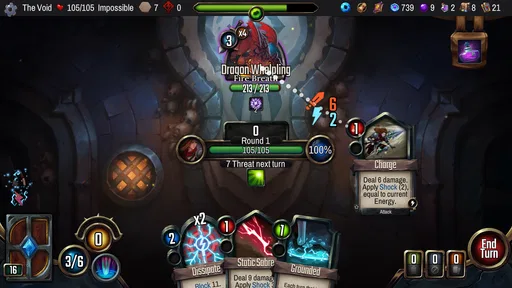
The heart of Vault of the Void lies in its strategic gameplay. Each decision feels meaningful, and the way you build and tweak your deck can have a huge impact on your success. You don’t just slap together a bunch of cards and hope for the best; you actually have to think about synergy and strategy.
There are various classes you can choose from, each with its own unique set of cards and abilities. This variety keeps the game fresh and encourages experimentation. Trust me, the satisfaction of pulling off a well-thought-out strategy is immensely rewarding. You’ll find yourself saying, "Just one more round," over and over.
Challenges and Replayability
What I truly appreciate about Vault of the Void is its replayability. The game does a fantastic job of mixing things up every time you play, thanks to its roguelike elements. No two runs are the same, which means you’re getting a fresh experience each time you dive in.
Sure, there are challenges. Sometimes you might find yourself on the losing end of a battle, but it’s all part of the fun. The game pushes you to learn from your mistakes and come back stronger. And let’s be honest, there’s nothing quite like the thrill of overcoming a tough opponent with a deck you’ve meticulously crafted.
Final Thoughts
In a crowded market of deck-building games, Vault of the Void stands out by offering a deep, strategic experience that rewards careful planning and creativity. Whether you’re a seasoned pro or a curious newcomer, there’s something here for everyone.
If you’re itching to test your strategic skills and enjoy a game that challenges your brain, then this might just be your next favorite pastime. Go ahead, give it a whirl, and see if you can conquer the void.
What the purchase means in practice
Before installing, I would check the platform’s purchase screen carefully. The game costs $6.99, so it is a paid game rather than a free trial, and it also lists in-app purchases at $2.99 per item. That makes it sensible to decide whether you are comfortable paying upfront before you know how much you enjoy its style. I would not treat the extra purchases as necessary to understand the core appeal; make that choice based on what the game presents to you, not on an assumption that spending more is required.
The listing identifies Spider Nest Games as the developer. It has a 4.4 average from 263 ratings, with 42 written reviews and over 10K installs. Those figures give a newcomer some context, but they are not a guarantee that its deliberate, run-based pace will suit everyone. The game is rated Everyone, was released on June 16, 2024, and version 2.8.9 requires Android 5.0 or later. If you are using iOS, check the relevant store page for device compatibility before buying.
A useful way to learn from a loss
When a run goes badly, I would avoid changing everything at once on the next attempt. Instead, pick one decision to rethink: perhaps you added a card that did not support your plan, or you committed to a direction before understanding what it needed. Keeping the experiment narrow makes it easier to see whether your adjustment helped. This is a small but valuable habit in a game built around strategic choices, because it turns failure into information rather than a vague feeling that the whole deck was wrong.
I would also give yourself permission to revisit a class after trying another one. The first impression of a class is shaped by unfamiliar cards as much as by its actual strengths. A short change of approach can make the differences easier to recognize, and then returning to the earlier class may feel less like starting over and more like applying what you have learned.
Making room for the right kind of session
A realistic use case is an evening when you have a little time to focus but do not want to commit to a sprawling story game. You can settle in, make deliberate decisions, and let a run provide a contained strategic challenge. I would still avoid beginning when you know you will need to stop immediately; even a clean interface cannot make thoughtful play feel good if your attention is being pulled away every moment.
For a first-time player, the most reassuring expectation is that success need not mean mastering every class or building an ideal deck on day one. A more useful milestone is recognizing why one choice worked better than another. Once that starts happening, the game’s variety becomes easier to enjoy rather than overwhelming, and each new run has a purpose beyond simply hoping for a better outcome.
My recommendation
My recommendation is straightforward: choose this if you want a single-player-feeling card strategy experience where planning matters more than speed, and where replaying after a loss is part of the attraction. I would point a newcomer toward the tutorial, a patient first run, and a willingness to try different classes before deciding whether the game has clicked.
I would steer someone toward a lighter or more social card game if they want instant rules, very short bursts, or direct competition with friends. But if you enjoy noticing patterns, adjusting a plan, and earning a win through better decisions, Vault of the Void is a distinctive option to consider. Its strongest moments come when you understand not just which card is useful, but why it belongs in the deck you are shaping.
Verdict
Strengths of Vault of the Void
- Engaging deck-building mechanics.
- Challenging tactical gameplay.
- Visually appealing art style.
- Regular updates and new content.
- Offline play available.
Limitations of Vault of the Void
- Steep learning curve for beginners.
- Limited tutorial guidance.
- Requires significant time investment.
- Occasional bugs in gameplay.
- No multiplayer mode available.
Similar Picks in This Category
View All
Solitaire - Classic Card Games
MobilityWare4.6

UNO!™
Mattel163 Limited4.3

Spider Solitaire: Card Games
MobilityWare4.6

Solitaire.com - Classic Cards
Tripledot Studios Limited4.7

Plants vs. Zombies™ Heroes
ELECTRONIC ARTS4.1

Hearthstone
Blizzard Entertainment, Inc.4.1
Frequently Asked Questions
What is the main gameplay of Vault of the Void?
Vault of the Void is a strategic deck-building game that challenges players to defeat enemies using a combination of skill and strategy. Unlike traditional card games, it emphasizes tactical decisions and offers a dynamic experience where players can customize their decks and adapt to various challenges throughout the game.
Is Vault of the Void suitable for beginners?
While Vault of the Void offers a deep strategic experience, it is designed to be accessible to newcomers. The game includes a comprehensive tutorial and various difficulty levels, allowing players to gradually familiarize themselves with the mechanics and strategies before diving into more challenging content.
Does Vault of the Void require an internet connection to play?
Vault of the Void can be enjoyed offline, making it perfect for gaming on the go. However, certain features, such as updates or leaderboard functionality, may require an internet connection. Players can enjoy the core gameplay without needing to be connected to the internet.
Are there any microtransactions in Vault of the Void?
Vault of the Void is a premium app with a one-time purchase price, ensuring a complete gaming experience without the need for microtransactions. This means players can enjoy the full depth of the game without worrying about additional purchases or pay-to-win elements.
What platforms is Vault of the Void available on?
Vault of the Void is available on both Android and iOS platforms. This ensures that players across various devices can enjoy the game. It is optimized for both mobile phones and tablets, providing a seamless and engaging experience regardless of the device used.
Play our best games!


